Satellite Tournament Models Expanding Poker Circuits to Regional Hubs
Paul Hartmann · May 30, 2026

Satellite Tournament Models Expanding Poker Circuits to Regional Hubs
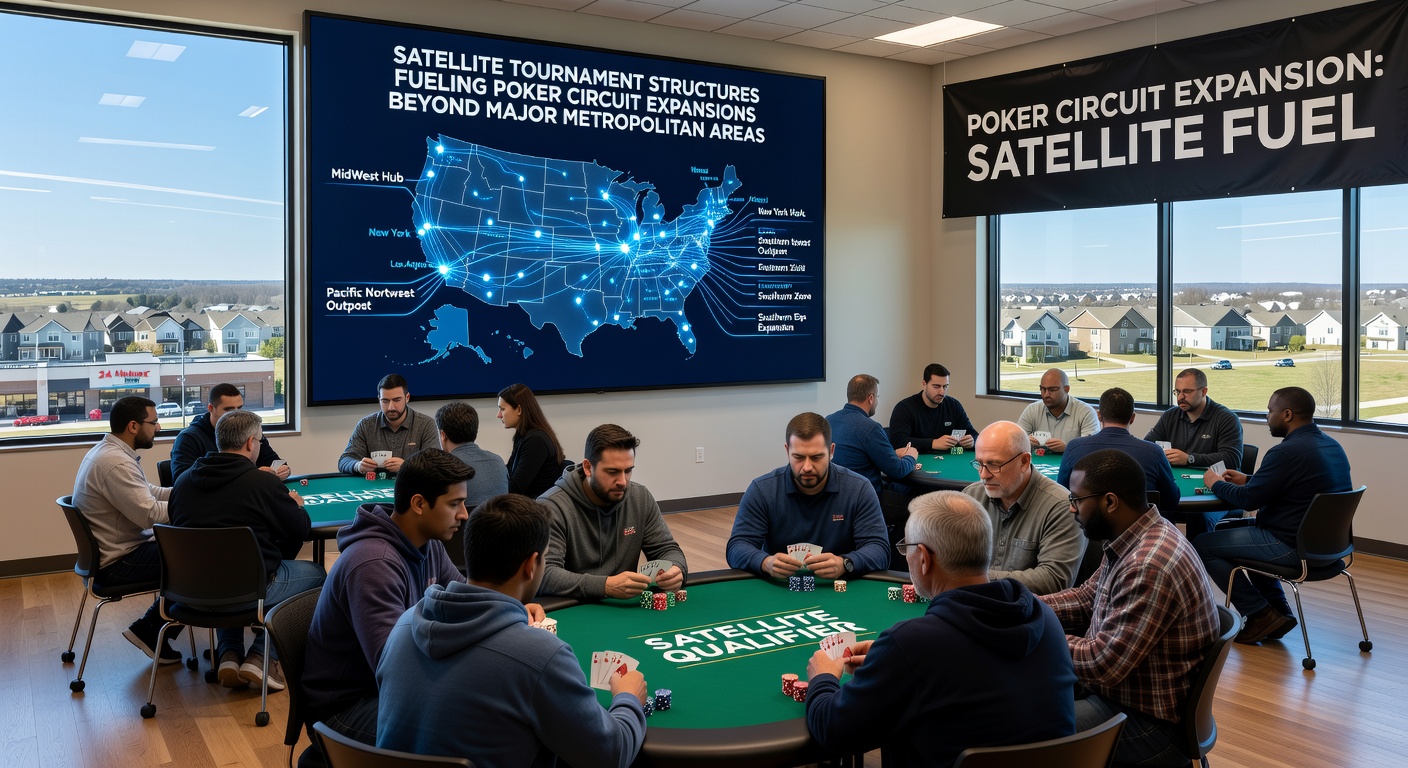
Satellite tournaments have become a key mechanism for broadening access to established poker circuits, allowing participants from smaller cities and towns to qualify for flagship events without direct travel to primary metropolitan centers; this structure relies on lower buy-in competitions where top finishers earn seats in larger tournaments such as those on the World Series of Poker schedule or regional tours. Data from industry tracking shows steady increases in the number of satellite events hosted in secondary markets across North America and parts of Europe, with participation numbers rising in cities like Omaha, Boise, and Winnipeg during the 2024-2025 season. Observers note that these feeders reduce financial barriers for players located far from Las Vegas or Atlantic City, creating pathways that connect local talent pools directly to national and international competition ladders.
Mechanics of Satellite Qualification Systems
Players enter satellite events with buy-ins often ranging from $50 to $500, and the format awards tournament entries rather than cash prizes to winners, which streamlines progression while keeping operational costs low for hosts; multiple tables run simultaneously in venues such as hotel ballrooms or community centers, with final tables determining qualifiers who then receive travel packages or direct entry codes for main events. Research from university studies on gaming economics indicates that this model has supported a 22 percent growth in regional poker participation rates between 2022 and 2025, particularly in areas without permanent card rooms. Organizers coordinate these satellites through partnerships with major circuits, ensuring that successful players from outlying locations integrate seamlessly into larger fields held in May 2026 and beyond.
Geographic Reach and Venue Distribution Patterns
Circuits have extended operations into non-metropolitan zones by scheduling satellites in mid-sized population centers, where demand has grown due to online promotion and word-of-mouth among local player groups; examples include stops in places like Springfield, Illinois, and Fredericton, New Brunswick, which now host regular qualifiers feeding into events previously limited to Chicago or Toronto. Figures from the American Gaming Association reveal that satellite-hosted events accounted for approximately 35 percent of total qualifiers at select 2025 circuit stops, up from 18 percent five years earlier. This distribution pattern relies on temporary setups rather than permanent infrastructure, allowing operators to test markets before committing to full series expansions.
Player Demographics and Participation Trends
Demographic data collected by tournament software providers shows increased involvement from players aged 25 to 40 residing in suburban and rural zip codes, many of whom cite satellite access as the primary entry point into competitive play; these participants often combine local events with occasional travel, forming networks that sustain year-round activity outside traditional hubs. A report issued by the Canadian Partnership for Responsible Gambling documented similar trends in western provinces, where satellite qualifiers contributed to a measurable uptick in tournament entries from communities under 100,000 residents. Such patterns align with broader shifts toward decentralized event calendars that accommodate work schedules and family commitments common in these regions.
Operational and Regulatory Considerations
Regulatory frameworks in multiple jurisdictions accommodate satellite structures through licensing that covers both online and live qualifiers, with oversight provided by bodies such as state gaming commissions in the United States and provincial authorities in Canada; compliance requirements focus on prize pool integrity and participant verification rather than venue size, which facilitates setup in diverse locations. Industry organizations including the European Gaming and Betting Association have published guidelines that address cross-border qualifier transfers, enabling circuits to maintain consistent standards when expanding into new territories. These measures support the logistical flow of players from satellite events into main tournaments scheduled for May 2026, while tracking ensures accurate reporting of participation volumes and revenue allocations.
Case Examples from Emerging Markets
One documented expansion involved a series of satellites in Boise, Idaho, that fed directly into a western regional circuit stop, resulting in 47 qualifiers advancing from local fields during a single quarter; similar initiatives in Australian regional centers, coordinated under oversight from the Queensland Office of Liquor and Gaming Regulation, produced comparable results with increased entries from non-capital cities. Observers point to these instances as evidence of scalable models that leverage existing community venues and digital registration platforms to reach previously untapped player bases. The approach avoids heavy capital investment in new facilities, instead relying on established hospitality partners who host events on rotating schedules.
Conclusion
Satellite tournament structures continue to reshape poker circuit geography by linking smaller markets to established events through qualification pathways, supported by regulatory adaptations and demographic data that confirm rising participation outside major centers. Continued coordination between operators and oversight agencies positions these systems to sustain growth into 2026 and subsequent seasons.