Slot Volatility Dynamics: Game Parameters Driving Monumental Payout Probabilities
Devon Ludwig · Jun 10, 2026
Slot Volatility Dynamics: Game Parameters Driving Monumental Payout Probabilities
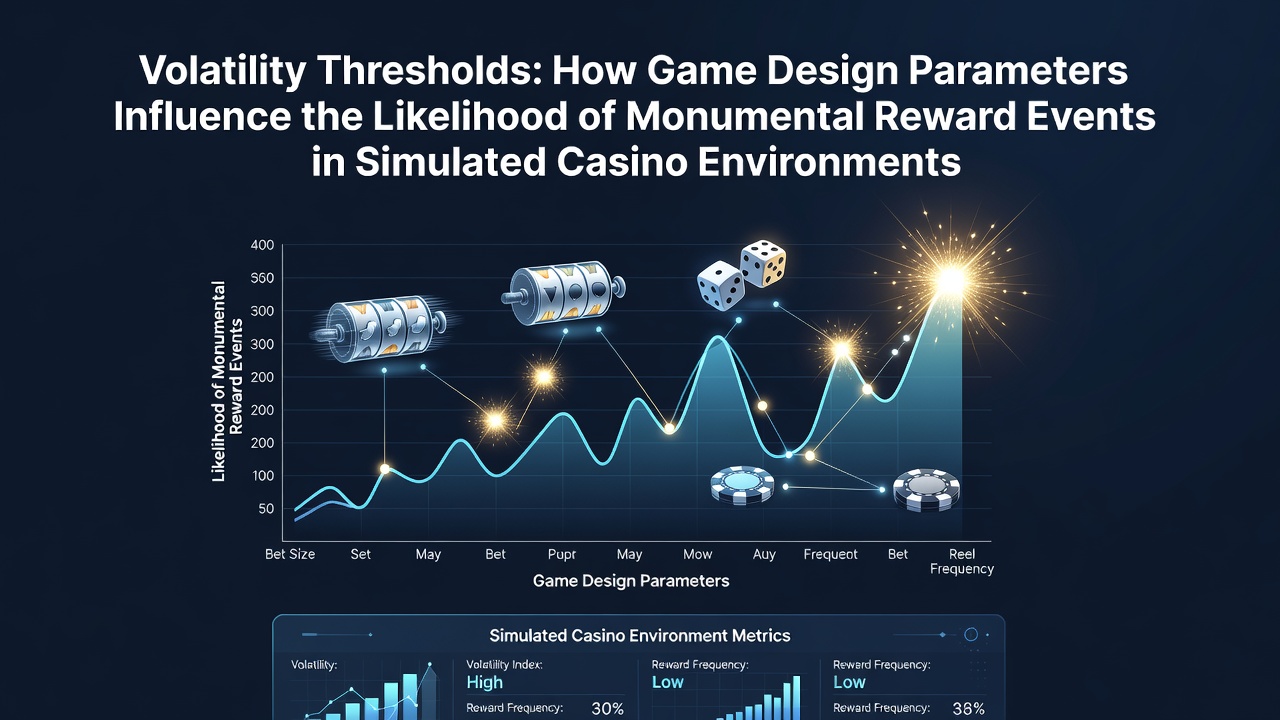
Game developers adjust volatility thresholds through specific design choices that directly shape how often monumental reward events occur in simulated casino environments, and these parameters include reel structures, bonus trigger rates plus random number generator calibrations that collectively set the boundaries between frequent small returns and rare large payouts.
Core Mechanics Behind Volatility Thresholds
Volatility refers to the mathematical distribution of outcomes in digital slot systems where low-volatility titles produce regular modest wins while high-volatility configurations delay payouts until larger sums accumulate, and researchers at institutions like the University of Nevada Reno have documented how these thresholds emerge from weighted symbol tables that control hit frequencies across thousands of spins. Data from the Nevada Gaming Control Board shows that operators report distinct clustering patterns when volatility settings exceed certain levels, leading to extended dry spells followed by concentrated reward sequences in player sessions.
Design teams calibrate these thresholds by modifying payline counts, symbol densities and multiplier layers, yet the underlying random number generator remains the decisive factor that determines whether a monumental event crosses the probability line in any given cycle.
Parameter Interactions and Reward Event Likelihood
Reel configuration plays a central role because increasing the number of reels or expanding the symbol set raises the denominator in payout probability equations, which pushes monumental rewards further into the tail of the distribution curve, and analysts note that adding stacked wilds or expanding symbols can counteract this effect by creating multiple winning combinations within single spins. Bonus round frequency serves as another lever where trigger rates set between 1 in 150 and 1 in 300 spins commonly mark the transition point between medium and high volatility classifications according to industry modeling standards.
Return-to-player percentages interact with volatility settings because a fixed RTP value spread across fewer but larger wins produces steeper distribution curves, while the same RTP distributed across more frequent smaller outcomes flattens those curves, and studies from Canadian gaming research centers confirm that these interactions remain stable across millions of simulated spins regardless of visual theme or audio layering.
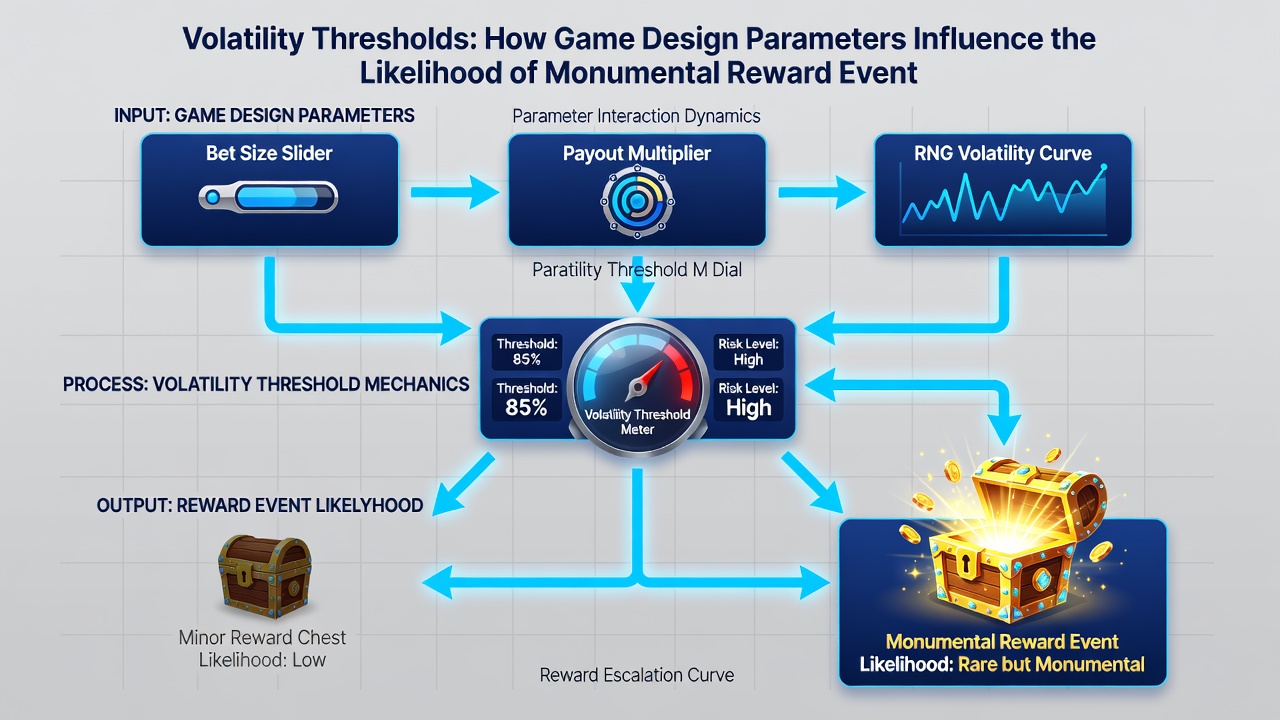
Progressive jackpot contributions further modulate thresholds when a small percentage of each wager feeds a shared pool, thereby increasing the ceiling for monumental events without altering base game volatility calculations, and regulatory filings from multiple jurisdictions illustrate how these pools grow in direct proportion to player volume across networked machines.
Simulation Testing and Threshold Validation
Developers run extensive Monte Carlo simulations before release to verify that volatility thresholds align with intended payout distributions, and these tests typically encompass at least 10 million spins to capture rare event occurrences wth statistical reliability. Observers note that adjustments made during this phase often involve fine-tuning scatter symbol weights or altering free-spin multipliers to shift the probability mass toward or away from the upper tail of the reward spectrum.
June 2026 reports from the Nevada Gaming Control Board highlighted several titles where simulation data revealed unexpected threshold shifts after minor reel-weight modifications, prompting operators to recalibrate marketing materials that describe expected win patterns to players.
Regional Regulatory Approaches to Volatility Disclosure
Authorities in different regions require varying levels of volatility information to be communicated to players, with some mandating numerical indicators while others focus on qualitative descriptors such as low, medium or high, and these requirements influence how game studios present parameter choices during certification processes. Research published through Australian academic channels demonstrates that transparent volatility labeling correlates with more stable player session lengths across simulated environments, although the underlying mathematical relationships remain unchanged by disclosure practices.
Industry associations continue to develop standardized testing protocols that allow cross-jurisdictional comparison of threshold settings, thereby enabling operators to select titles whose volatility profiles match specific market preferences without altering core game mathematics.
Conclusion
Volatility thresholds emerge as the product of interconnected design parameters that collectively determine the likelihood of monumental reward events in simulated casino environments, and continued refinement of simulation tools alongside regulatory data collection supports more precise calibration across global markets. Those who analyze these systems recognize that small changes in reel weighting or bonus frequency produce measurable shifts in payout distributions, while the fundamental role of random number generators ensures that outcomes remain unpredictable within established probability boundaries.