Virtual Table Features Shape Choices in Multiplayer Online Card Environments
Lars Bennett · Jun 29, 2026

Virtual Table Features Shape Choices in Multiplayer Online Card Environments
Multiplayer digital card rooms operate through interfaces that replicate physical tables while introducing unique variables such as avatar visibility, response timers, and chat modules, and these elements combine to alter how participants evaluate risks and adjust strategies during live sessions. Observers note that seating arrangements in virtual formats often display player positions in fixed grids, which allows quick assessment of stack sizes and action order without physical movement around a felt surface.
Core Components of Virtual Table Setups
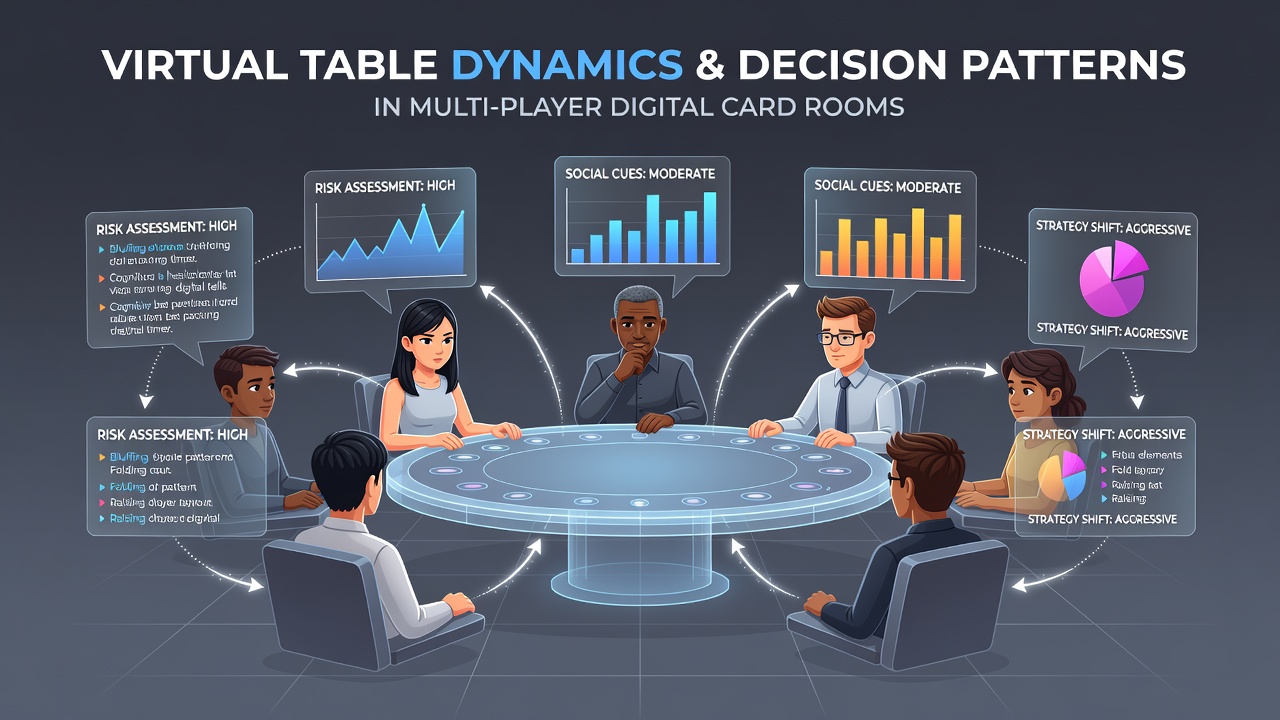
Digital platforms present card rooms with standardized layouts that include real-time indicators for pot amounts, player statistics, and fold rates, while avatars serve as the primary visual proxies for opponents since facial expressions and body language remain absent. Researchers at institutions across North America and Europe have documented how limited visual data shifts focus toward numerical patterns and timing sequences instead of traditional tells, and this transition occurs consistently across games like Texas Hold'em variants and other community card formats.
Chat functions add another layer because typed messages can convey aggression or cooperation depending on frequency and tone, yet automated filters in many systems restrict certain phrases to maintain neutral environments. Data from industry reports compiled by gaming associations in Australia and Canada indicate that rooms with active chat see measurable changes in bet sizing during multiway pots, as participants respond to textual cues that supplement the limited visual information available.
Timing Mechanics and Their Effects on Patterns
Countdown timers enforce action windows that range from 15 to 30 seconds in most implementations, and these constraints encourage quicker decisions compared to land-based venues where pauses can extend indefinitely. Studies compiled by academic teams in the United States reveal correlations between shorter timers and increased preflop raise frequencies, since players allocate less time to complex range construction and rely more on memorized heuristics.
Extended timer options in premium rooms allow deeper analysis, yet usage data shows that even when available, most participants default to faster clicks to maintain table rhythm and avoid signaling uncertainty to others. This behavior emerges because repeated delays become observable through action histories that platforms display publicly, creating indirect pressure that influences subsequent hands.
Player Count Variations Across Formats
Tables configured for six players versus nine create distinct decision environments because shorter stacks relative to blinds in smaller formats accelerate confrontation points, and this compression leads to wider opening ranges according to aggregated hand histories released by platform analytics divisions. European research groups have tracked how six-max participants adjust three-bet thresholds downward when facing fewer opponents, while full-ring formats preserve tighter early-position standards due to the increased chance of later-position aggression.
Dynamic table balancing algorithms that merge or split groups based on departures further complicate patterns, since sudden shifts in player numbers reset established reads and force recalibration mid-session. Observers tracking these transitions in June 2026 noted that rooms with rapid balancing experienced spikes in fold equity exploitation immediately after merges, as incoming players lacked prior history data on the new lineup.
Avatar and Profile Data Influences
Customizable avatars paired with displayed screen names allow limited personalization that some users leverage to project certain images, and platforms that permit stat overlays on profiles enable opponents to reference VPIP and aggression factors directly. This information accessibility reduces the learning curve for regulars who compile notes across sessions, while recreational entrants often overlook these tools and default to baseline strategies regardless of displayed metrics.
Platforms based in regulated markets outside the United Kingdom, including those overseen by bodies such as the Pennsylvania Gaming Control Board, enforce identity verification that limits multiple account usage and thereby stabilizes player pools over time. Such measures support consistent decision modeling because repeat opponents accumulate reliable behavioral data rather than facing rotating anonymous entries.
Integration of External Data Streams
Real-time hand tracking software that feeds into separate databases interacts with table interfaces by providing historical context on specific screen names, and this external layer amplifies the weight placed on numerical evidence during live play. Academic papers from Canadian universities have examined how access to such tools correlates with more polarized betting lines in heads-up situations, since ranges become easier to narrow through volume analysis.
Yet rooms that prohibit third-party integrations maintain environments where decisions rest solely on in-session observations, leading to broader variance in outcomes as participants cannot leverage accumulated databases. The distinction appears clearly in comparative reports issued by trade organizations representing operators across Asia-Pacific jurisdictions.
Conclusion
Virtual table dynamics in multiplayer digital card rooms operate through interconnected features that collectively redirect attention from physical cues toward quantitative indicators and timing signals, and these shifts produce measurable adjustments in betting frequencies, range widths, and response strategies. Continued monitoring by regulatory and academic sources across multiple continents will likely document further refinements as interfaces evolve and player adaptation patterns stabilize around the available tools.